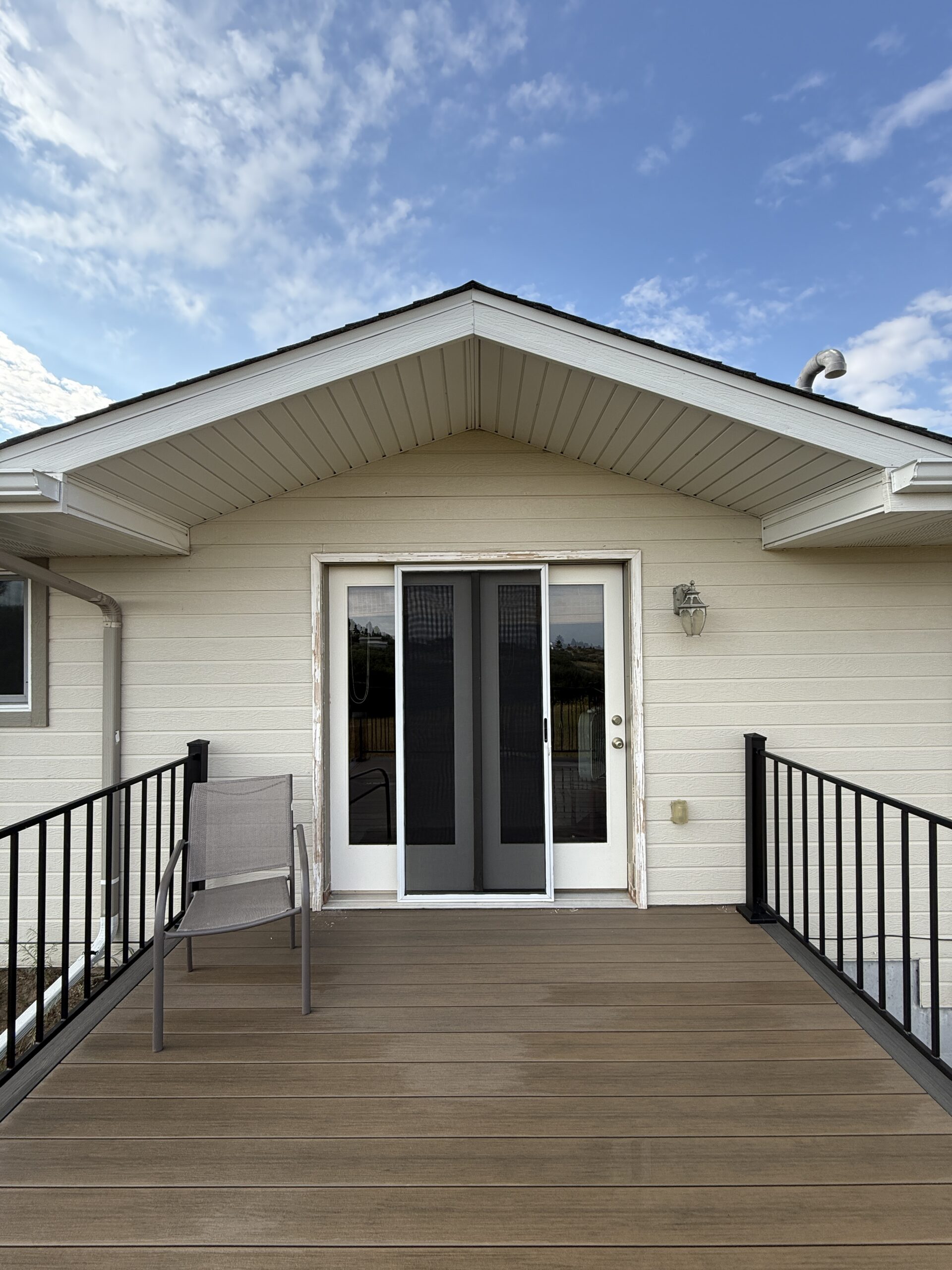
Maybe you have stood on your deck lately and wondered, “Should I paint or stain my deck?” It is a smart thing to sort out before you spend a dollar. The deck paint vs stain choice decides how long your finish lasts. And it sets how often you go back out there to redo it. Around Castle Rock, it matters even more, since Colorado sun and seasons are rough on wood. So once you know what each finish does, the answer for your deck gets a lot clearer.
What Deck Paint vs Stain Really Comes Down To
At the most basic level, the two finishes treat your wood in opposite ways.
Paint sits on top. It dries into a film that seals the surface. And that film blocks out water and light. So you get a solid color and full coverage. It hides age spots, mismatched boards, and old repairs. But the grain disappears under it.
Stain works the other way. It soaks into the wood instead of coating it. So the grain stays visible, with a natural, woodsy look. And because it does not build a film, stain will not crack or peel. An old coat of paint can do both.
Neither one is the better choice on its own. They simply do different jobs. So a worn, high-traffic deck often takes paint well. The film hides flaws and adds a tough layer on top. But a newer deck in good shape is a strong candidate for stain, since the grain is worth showing off. So the real question is not which finish wins. It is which finish fits the deck you have.
Paint vs Stain: How Each Finish Protects the Wood
This is where solid research helps. And the most trusted source here is not a paint brand. It is public universities and government research.
Purdue University Extension put out a wood finishing publication with the USDA Forest Products Laboratory. And its takeaway is plain. Paints give the wood the most protection. Penetrating stains keep a natural look and are simpler to refinish. But clear film finishes last the least, sometimes barely a year in harsh sun.
Stain has real strengths too. Since it soaks in rather than films over, it will not bubble or flake. So touch-ups are easier down the road. But the catch is the wood. Stain works best on well-maintained boards that have not been painted. Pour it over a tired or painted surface, and it cannot do its job.
Now, one honest note for deck floors. Paint can get slick when wet. And that matters on a walking surface. But there are grippier deck paints built for it, so it is worth asking about. The point is that paint and stain each carry trade-offs. So a flat answer of always stain or always paint skips the part that actually affects your wood.
Why Colorado Weather Changes the Deck Paint vs Stain Math
Most deck advice online is written for an average backyard at low elevation. But your deck does not live there.
Castle Rock sits around 6,200 feet above sea level. According to the National Weather Service, UV exposure climbs as you go up. And the rate is about 4 to 5 percent per thousand feet. So run the math. A deck here takes on roughly a quarter more UV than the same deck at sea level. Then add Colorado, with near 300 sunny days a year. That is a lot of light hitting your boards.
So UV is what fades color, dries out wood, and breaks down the top finish. Then winter brings the freeze-and-thaw cycle. Moisture works into the wood, freezes, expands, and loosens finishes. And spring snowmelt soaks the surface all over again.
So a finish that would last for years in a milder climate can fail early up here. And that is why local painters lean a certain way. Barco’s Painting of Colorado paints more than 90 percent of its outdoor woodwork. The film stands up better to the sun and seasonal swings here. Still, stain is on the table when the wood calls for it.
Cost Now vs Cost Over the Years
Money is usually the quiet part of this decision. But the deck paint vs stain math changes once you look past day one. So let us put real numbers on it.
Staining tends to be cheaper to start. Hiring a pro often runs a few dollars per square foot. And a standard deck might land in the hundreds. Painting usually costs a bit more. Figure around $2–$5 per square foot. And a typical 300-square-foot deck averages close to a thousand dollars.
So stain looks like the budget winner. On day one, it is. But the picture changes over time. A stained deck needs a fresh coat every two to three years. And a quality paint job holds longer between redos. So stretch that across ten or fifteen years. The cheaper option keeps asking for your wallet. And the gap narrows, until sometimes it flips.
Here is the part a careful spender needs in plain view. The lowest sticker price is not always the lowest cost. So the smarter measure is what the finish costs you per year it stays on the wood.
How the Paint or Stain Decision Gets Made on Your Deck
Reading about finishes only gets you so far. Two decks that look alike can need different answers. It comes down to the wood’s condition, the sun’s angle, and how hard the family uses the space. So the deck paint vs. stain call is best made on-site, with eyes on the actual boards.
Here is the simple plan Barco’s Painting of Colorado follows on its deck and fence painting projects:
So that preparation-first approach runs through the company’s residential painting services too. And it covers decks, fences, and full exteriors. Outdoor work also carries a five to twelve-year exterior warranty. So the finish is backed long after the crew leaves.