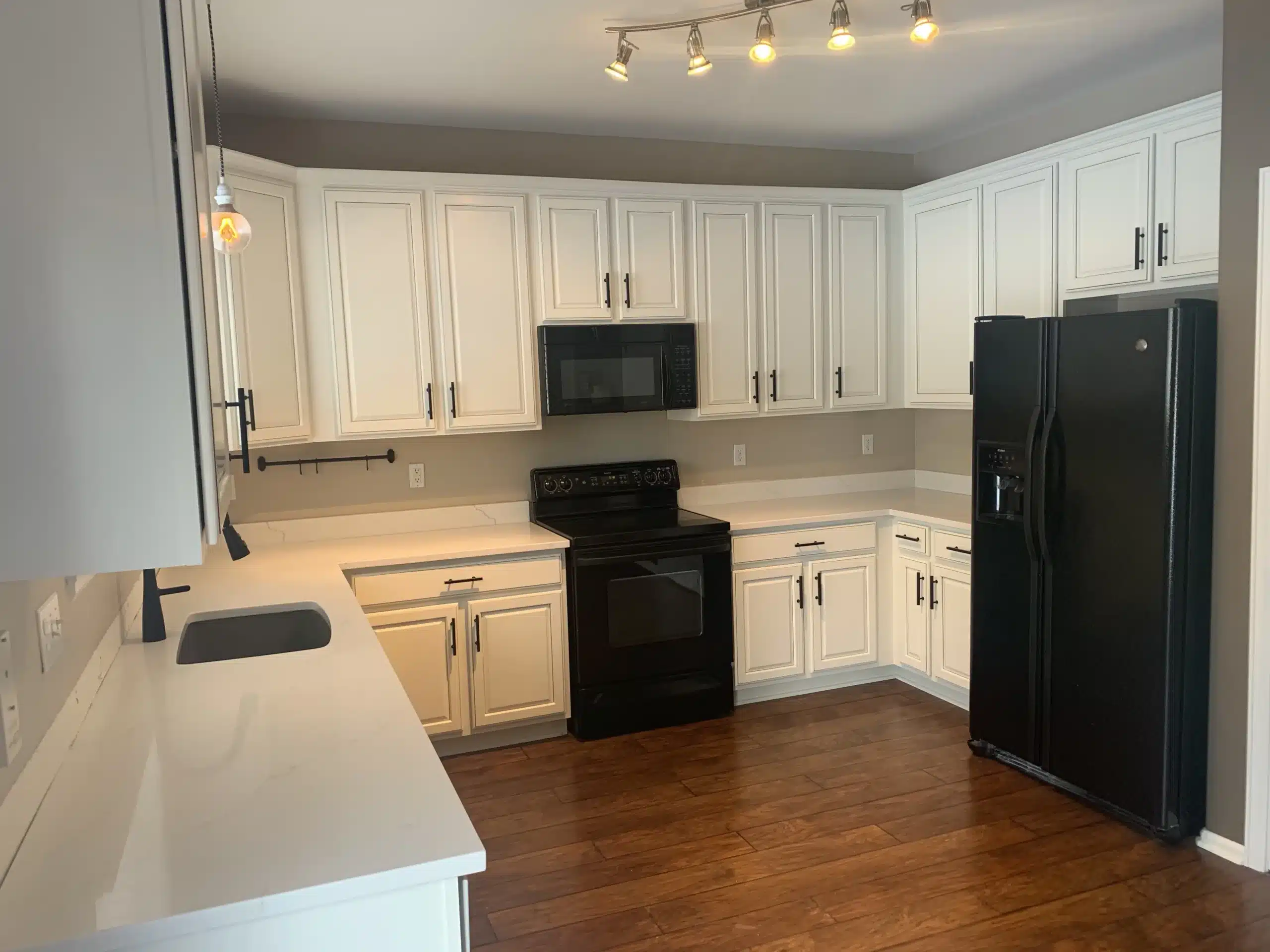
If you are weighing professional cabinet painting for your kitchen, one question usually sits at the front of your mind: how long do painted cabinets last before they start to look worn? It is a fair thing to ask. You are about to spend real money on a finish that gets touched, cleaned, and bumped every single day, and you want to know it will still look good in five years, not five months.
Here is the honest answer up front. A professionally painted set of cabinets typically lasts 8 to 10 years. A rushed or poorly prepped job can start chipping in 3 to 4 years. The gap between those two numbers has almost nothing to do with luck and almost everything to do with the work that goes into the first coat.
The Real Question Behind How Long Painted Cabinets Last
When most people ask how long do painted cabinets last, they are really asking something deeper. They are asking, “Am I about to waste my money?” That is the worry under the worry, and it is a smart one to have.
Nobody wants to pay for a kitchen refresh, love it for a year, then watch the corners peel, and the doors look tired again. Painting cabinets can feel like a gamble when you cannot see what separates a job that holds from one that does not. So let us pull back the curtain.
Cabinets are among the hardest surfaces in your home. Doors get opened with greasy fingers. Drawer fronts catch steam from the stove and splashes from the sink. Cleaning sprays hit them daily. No other painted surface in the house takes that kind of beating. A finish that wasn’t prepped right wears out far faster than your walls ever would.
What Makes Cabinet Paint Fail Early
If you remember one thing, remember this: paint does not stick to grease. A kitchen cabinet wears a thin film of cooking oil and hand residue, even when it looks clean. Skip the cleaning step, and the paint sits on top of that film instead of gripping the surface. Within a year or two, it starts to lift.
Here are the usual reasons a cabinet finish fails early:
That last one trips up a lot of people. Drying and curing are not the same thing. A finish can feel ready while it is still hardening underneath. Knock a pan into a door during those first couple of weeks, and you leave a mark that never fully heals. A pro plans for cure time. A weekend job rarely does.
The Cost Math Most People Miss
Now for the part that changes how you should think about this whole project. Most homeowners compare painting to replacement and stop at the sticker price. Based on national cost data from Angi, painting kitchen cabinets averages around $940, while replacing them runs closer to $6,400 and can climb well past that. Painting clearly wins on day one.
But the number that matters more is cost per year. Watch what happens.
A solid paint job at, say, $2,000 that lasts 10 years costs you $200 a year. A cut-rate job at $1,200 that fails in 3 years costs you $400 a year. The cheaper job ends up costing twice as much over time. You did not save money. You rented a finish.
This is the trap with picking a painter on price alone. The quote that looks lower today is often the one that skips the prep that makes a finish last. You pay less once, then you pay again sooner. Spending a little more on a job done right helps protect your budget over the years you plan to stay in the home.
How Prep Decides How Long Painted Cabinets Last
So what does a job done right look like? At Barco’s Painting of Colorado, the work starts long before any color goes on. Every door and drawer front is cleaned to strip away grease and residue that break down the bond. Surfaces are sanded so the new finish has something to grip. Primer goes on next, then a cabinet-specific finish coat built for high-touch, high-moisture rooms.
That product choice matters. Barco’s Painting of Colorado uses Sherwin-Williams and Benjamin Moore cabinet formulas, which cure into a hard film made to take daily cleaning and contact. These are not the same cans you would grab for a bedroom wall. You can see the full process on the professional cabinet painting service page.
The reason this matters for you is simple. The prep is the part you never see, and it is the exact part that decides whether your cabinets look sharp in year eight or tired in year three. A finish is only as good as the surface under it.
What You Can Do to Make the Finish Last
You play a role too, and the habits are easy. Wipe up spills quickly, especially any acidic ones like citrus or vinegar. Use a soft cloth and gentle soap, not abrasive scrubbers that dull the surface. Add knobs and pulls if you do not have them, so greasy hands touch hardware instead of paint. Keep the kitchen ventilated to manage moisture. None of this is hard, and all of it pushes your finish toward the long end of that 8 to 10 year range.
Treat the first few weeks gently while the finish cures; the whole job will last longer.