
A wood fence almost never fails all at once. It goes gray, then chalky, then soft, and by the time someone calls me about deck and fence painting in Castle Pines, CO, the boards along the bottom rail are often already spongy. The gap between a repaint and a full replacement is usually about one dry season of waiting. That gap is the whole point of wood fence maintenance. Paint and stain are not decoration on a fence. They are the moisture barrier that keeps Front Range weather out of the grain, and once that barrier thins, the wood stops being protected long before it starts looking bad.
What Wood Fence Maintenance Is Actually Protecting
Most people think of a fence finish as a color choice. It is closer to a raincoat.
Wood rots when fungi get enough moisture inside the grain to go to work. Decay needs sustained wetness in the wood itself, not just a rainy afternoon. Research from the USDA Forest Products Laboratory treats wood held near 20 percent moisture content as having a reasonable margin of safety, and serious decay starts once the wood stays well above that. A sound paint film keeps rain, snowmelt, and sprinkler overspray from pushing the boards past that line.
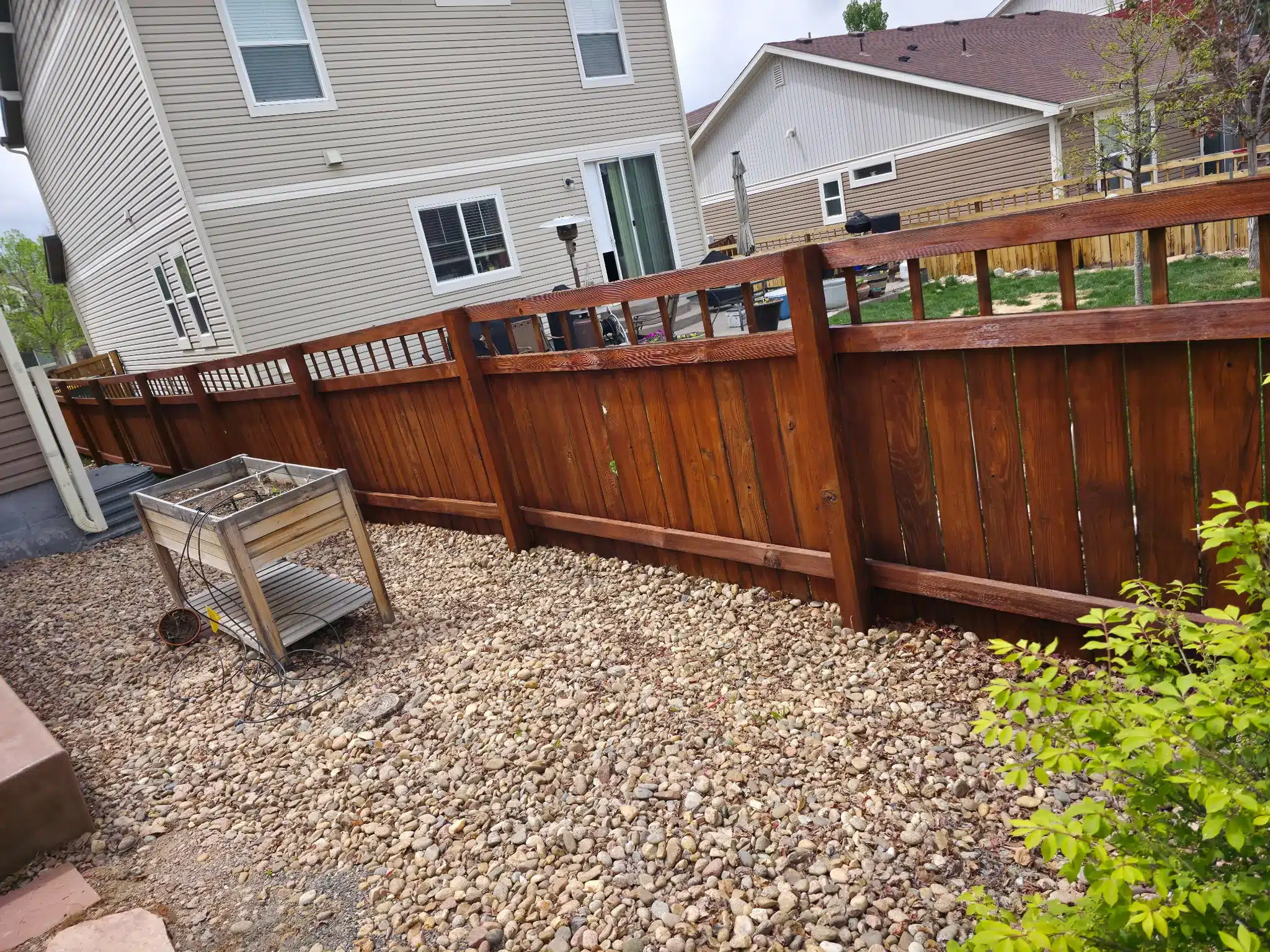
When the film wears thin, water gets in and leaves slowly. The wood swells, then shrinks, then swells again, and each cycle loosens the fibers a little more. That is why a fence can look merely tired one summer and be structurally soft two summers later. The finish is not what fails first. The wood underneath it is.
The Signals I Watch For on a Fence
I walk fences before I quote them, and I read them in a specific order. Here is what each signal means and how quickly it usually needs attention.
| What you see | What it means | How soon it matters |
|---|---|---|
| Chalky residue on your hand | The binder in the finish is breaking down | Plan within the season |
| Uneven graying, worse on south and west runs | UV has stripped the surface fibers | Plan this year |
| Paint lifting in sheets or flakes | Moisture is already behind the film | Schedule now |
| Cupped, curled, or twisted boards | The wood is wetting and drying repeatedly | Schedule now, expect some board swaps |
| Soft or crumbly spots near grade | Decay is established in the wood | Board replacement comes before paint |
The first two are the cheap ones. A fence caught at the chalking stage needs cleaning, spot priming, and a fresh coat. A fence caught at the soft-wood stage needs carpentry first, and carpentry is where the number climbs.
One more thing worth checking: the bottom six inches. Snow piles against a fence line and sits there, and that band of board stays wet for weeks after the yard dries out. It fails years ahead of the rest of the fence and almost nobody looks at it.
Why Castle Pines Fences Run on a Shorter Clock
Castle Pines sits above 6,000 feet, and the weather here works wood harder than the national averages suggest.
NOAA climate normals for the Denver area record 62 nights a year at or below 32 degrees, compared with only 21 days when the high never breaks freezing. Together, those two numbers describe a freeze-thaw cycle, not a cold winter. Water that soaked into a board at 3 PM freezes at 2 AM and expands, then thaws the next afternoon. Repeat that dozens of times a year, and the grain opens up.
Add strong high-altitude sun, very low humidity, and afternoon storms that soak a fence and then leave it to bake, and the timeline compresses. A finish that would hold eight years in a milder climate often shows its age here in four or five. That is a scheduling fact, not a sales pitch, and it’s why wood fence maintenance in this area works better as a calendar item than a reaction. This is also why deck and fence painting in Castle Pines, CO, follows a different schedule than it would in a milder state.
The Cost Math Most People Run Too Late
This is the part that changes decisions.
| Approach | Typical range per linear foot | What it includes |
|---|---|---|
| Paint or stain an existing fence | $3 to $14 | Cleaning, prep, and finish |
| Replace wood fencing | $10 to $45 | New posts, panels, and labor |
| Remove the old fence | $3 to $7 | Demolition and disposal |
Those ranges come from Angi’s 2026 fence cost data. Run the math on a 150-foot fence line, and the spread isn’t subtle. Finishing it sits in the hundreds to low thousands. Tearing it out and rebuilding it starts where finishing ends and goes up from there, before disposal.
Nobody replaces a fence because they want to. They replace it because maintenance slipped past the point where a finish could still do its job. Repainting on schedule is the cheaper decision made earlier, not a different decision.
Paint or Stain, and the Right Month to Book It
Both work. They fail differently.
Stain soaks into the wood and keeps the grain visible, which is the look most homeowners picture. It needs wood in good shape and it needs reapplying more often. Paint sits on top as a thicker film, hides previous repairs, and holds longer against UV. Over 90 percent of the outdoor work Barco’s Painting of Colorado completes uses paint rather than stain, and that is a durability call based on what survives Colorado, not a preference.
Timing matters as much as product. Outdoor finishes go down properly in dry conditions above 50 degrees, which puts the reliable window here between mid-spring and early fall. Booking in March or April usually means the work happens before the summer storm pattern sets in. Waiting until September often means competing with everyone else who waited.
The Plan I Use on Every Fence
The process is not complicated. It is just done in order, every time.
Barco’s Painting of Colorado has completed over 1,800 projects across Southern Denver Metro since 2015, holds 53 five-star Google reviews and an A+ BBB rating, and carries $2 million in liability coverage. Every estimate is free, in writing, and locked in under a No-Surprise Guarantee before anyone starts. Exterior work carries a 5 to 12 year warranty. I run the same process in Castle Rock, Lone Tree, Highlands Ranch, and Parker.